Posted: May 29, 2013
“The cheers could be heard all the way from London to Athens, Dubai, Singapore, Cape Town, Sydney and throughout the GAC world last night when our sponsored team Crystal Palace beat Watford and won promotion to the Premier League.
It’s at times like this that we really feel the appeal of ‘The Beautiful Game’ and enormous pride that we have been the Club’s main sponsor since 2004.
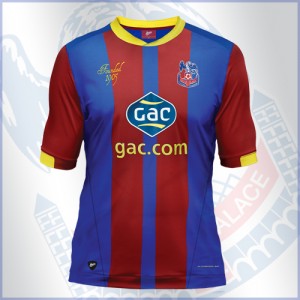
For news of Crystal Palace and other teams and athletes we support, as well as the latest updates from the GAC Group, check out our pages on Facebook (www.facebook.com/GACgroup) and LinkedIn (www.linkedin.com/company/gac-group).”
GTSS combines the NMCI’s state-of-the-art facilities with GAC’s global reach and 50 years of shipping experience. http://www.nmci.ie/index.cfm/page/gtss
Sign Up to our Newsletter
Click Here
Posted: February 27, 2012
In the latest edition of Dry Cargo International magazine, GAC’s ship agency operations are discussed as well as GTSS, the NMCI and the partnership with Brobulk. Read the full article below:
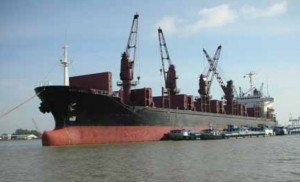
Ships’ agents prove their worth
GAC is a global provider of shipping, logistics and marine simulation training. As one of the world’s largest ship agencies, it has developed its business on a reputation for professionalism and quality service. As ships’ agent, GAC represents more than 3,500 customers and handles close to 60,000 vessels annually through a worldwide network of over 300 offices and a presence in over 40 countries. It is due to the breadth of services that it can offer worldwide that the GAC Group has the financial strength, experience and economies of scale to offer a one-stop solution to customers across the globe. In this article, GAC’s group sales director of shipping, Neil Godfrey, gives his insights into the company’s role in the ships’ agents market, and a view of the shipping industry in general.
As a ships’ agent, GAC offers an extensive portfolio of services related to both ship and cargo, which can be tailored to
meet each customer’s needs. These include: read more…
Sign Up to our Newsletter
Click Here
Posted: October 18, 2011
“Training too often seen as a ‘soft’ cost.’ The lastest article from Jeffrey Blum highlights the importance of training. Offshore training in particular is something we focus on here at the NMCI.
“The struggling dry bulk sector suffers from a basic lack of professional expertise that can generate serious problems. The cause and solution are straightforward, argues Jeffrey Blum.
Perhaps the most striking difference between the dry bulk sector today and a decade ago is the increasing dominance of the market by large companies.
In itself, this is not a problem but the industry has been navigating tough times for a number of years and, as a result, training is often high on the list of immediate cost cutting opportunities. This is short sighted.
The size of a company does not necessarily dictate a level of professionalism, expertise or commitment to quality training within it. Because of their size and scale, too many believe they can rely upon internal expertise to train others – an approach that is more often than not ineffective.To avoid the mistakes of one generation being passed down to the next, these organisations need more thorough and standardised training than current internal processes provide. The sector is already struggling with self professed experts disseminating their ‘knowledge’ and, by doing so, simply extending their own operational ineffeciencies.
The proof of these problems lands on arbitrators’ desks every day. Of the disputes I come across, too many stem from a basic lack of knowledge and understanding.
Commonly these disputes are about demurrage calculations, but the subject of the dispute is secondary to its underlying cause: a lack of training in how to carry out these processes appropriately. read more…
Sign Up to our Newsletter
Click Here
Posted: August 23, 2011
R2S used on offshore vessels will aid seafarer training
Return to Scene (R2S) technology is one of the latest innovations in maritime training to improve safety and reduce repetition of potentially serious incidents. R2S was developed by UK-based Return to Scene Ltd and can be used not just for training but also for managing maintenance, vessel management and emergency response.
R2S technology links together high resolution 360 degree spherical photographs, using highly specialised cameras. The photographs create a virtual walk-through environment for trainees, says Conor Mowlds, director of GAC Training & Service Solutions Ltd (GTSS).
“R2S is one of the most exciting technological advances to be developed for shipping safety,” Mr Mowlds adds. “This immerses the training participant in the scene, allowing him or her to explore linked scenes, as well as magnifying, enhancing and measuring elements in each.
“Participants can also view associated plans, documents and certificates, listen to audio, view video and access web links, all from a single PC interface,” Mr Mowlds explains. “In many ways, this is more practical than being in situ, as well as being safer and more cost-effective. Team collaboration is also enhanced, as users anywhere in the world can use R2S.”
This is all linked through R2S software. After capturing the onboard images, R2S processes the data to create a database in collaboration with the client. This builds an asset management system that can then be used by multiple departments in an organisation, which in the case of training is the maritime academy.
“R2S’s immersive, visually intensive approach promotes situational awareness and readiness without the need to visit the asset in question physically,” says Mr Mowlds. “As such, R2S is the perfect tool for training people in the skills needed for remote vessels, where access and safety is at a premium. For larger organisations, R2S is also a tool for ensuring global standards for all personnel and disseminating best practice.
GTSS is a partnership between global shipping and logistics group, GAC, and the National Maritime College of Ireland (NMCI). NMCI is a US$100 million training facility in Cork with a suite of 17 simulators, fully operational full-sized ship engine and control rooms, workshops, an R2S program, fire- fighting training facilities and a survival pool.
R2S has already been put to good use by the oil and gas industry, where the enhanced visualisation tool has been utilised for vessel and asset management, training and emergency response planning by the likes of US oil majors, Chevron and ConocoPhillips, and North Sea platform operator, Petrofac.
Support vessel owner Bibby Offshore, makes wide use of R2S. It predominantly uses the technology for risk management, contingency planning and business continuity activities.
Bibby’s offshore vessels have been captured in their entirety using 360 degree spherical images. Bibby has added supplementary information, including risk assessments, processes, procedures, reports, video footage, 3D models, animations, plans and audio files, which have been ‘tagged’ to relevant parts of the images. These become ‘hotspots’ on the image, allowing users to retrieve the associated documentation.
To sign up to our newsletter click here – http://www.nmci.ie/newsletter-signup
Sign Up to our Newsletter
Click Here
Posted: June 16, 2011
Innovative Training for Testing Times
Christer Sjödoff, Group Vice President GAC Solutions and Director GAC Training & Service Solutions (GTSS), explores how training providers are adapting their philosophies and methods to face the needs of the modern maritime industry.
The maritime industry has always been the backbone of world trade but now its businesses face a multitude of pressures from within its operating environment. Amid continued economic uncertainty, shrinking margins, rising bunker prices, increasingly stringent environmental regulations and ongoing operational challenges, it is perhaps understandable that some might regard training as just another cost.
read more…
Sign Up to our Newsletter
Click Here


Connect with NMCIS